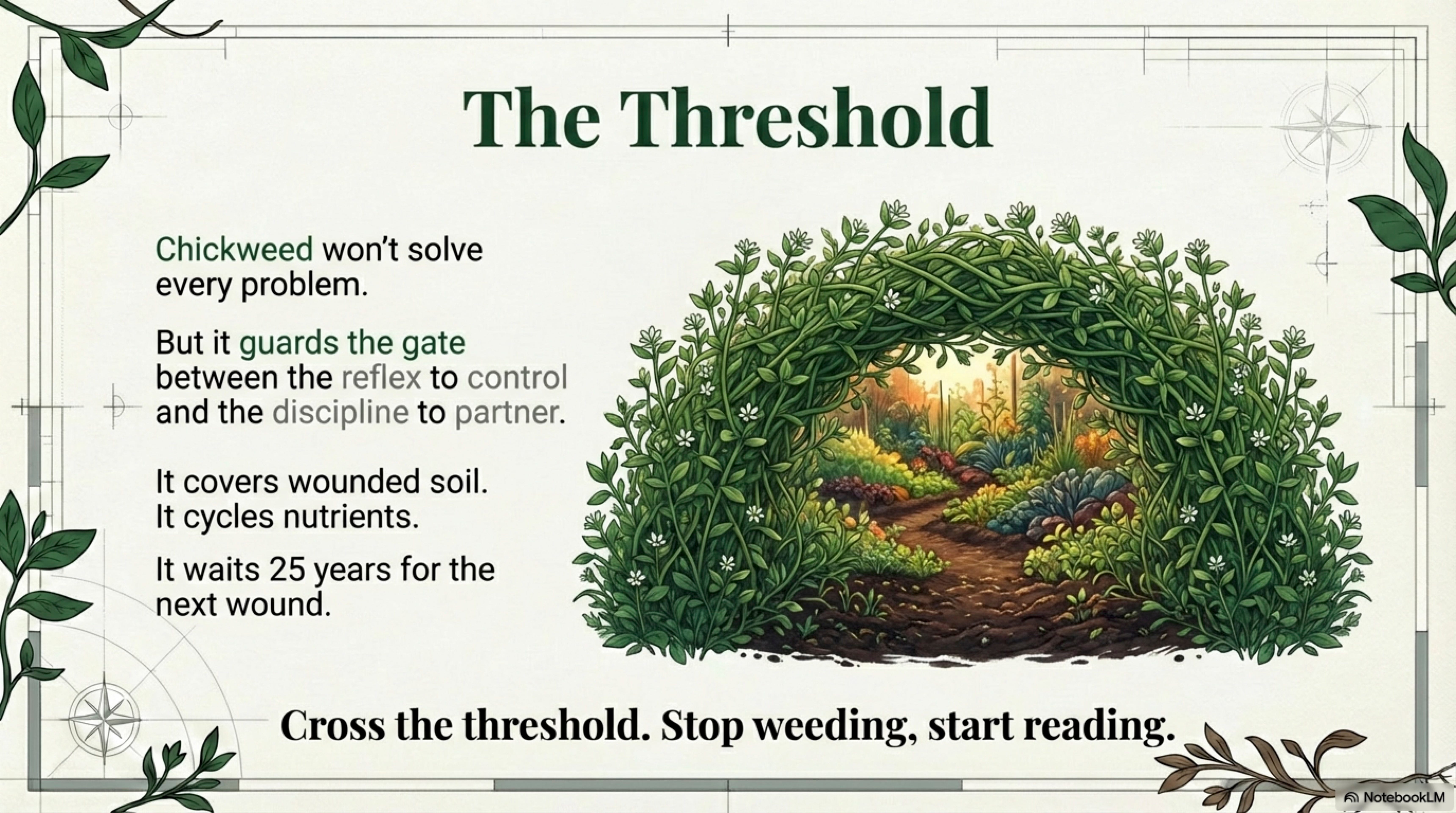
Chickweed: The Threshold Plant Chickweed: The Threshold Plant
What a soft, weedy blanket teaches about soil, water, and paying attention.

Chickweed is one of those plants that forces a choice: you can keep treating it like an intruder, or you can start treating it like a message.
For this deep dive, I ran it through thirteen lenses, not to pile up information, but to get the right information: what it’s doing in the soil, how it moves water, who it feeds (and who it accidentally hosts), what the old medicine stories get right and where they get dreamy, how time and disturbance keep inviting it back, and what it actually costs, or saves, in labor and inputs.
Then I braided those perspectives together so you’re not left with random fun facts, but something you can use: a way to read chickweed as indicator, helper, tradeoff, or boundary, depending on where it’s growing and what you’re trying to grow.
Chickweed: The Threshold Plant
If you see chickweed as an ally, you stop asking, “How do I get rid of it?” and start asking, “What should I do with all this free food?”
That’s the threshold this plant guards. Cross it, and you’re no longer weeding, you’re reading.
Chickweed (Stellaria media) is the kind of teacher that shows up uninvited, spreads a mat across your beds during the rainiest months, and waits for you to notice it’s doing a job you didn’t know needed doing. It’s soft. It’s succulent. It photosynthesizes at zero degrees Celsius like a quiet flex nobody asked for. And if you rip it out without understanding what it signals, you’ve thrown away both the message and the messenger.
Let’s walk through what this plant actually does; across soil, water, insects, livestock, medicine, and time, so you can decide for yourself whether it’s a problem or a partnership.